Menu
Your Cart
Delivery available nationwide | Free shipping over R1,000 | Secure payment via Visa, Mastercard & Peach | Trade accounts — call 021 931 0555

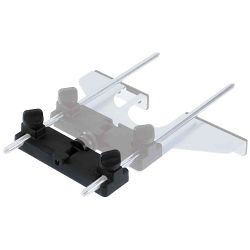
FESTOOL SA-MFK 700 Parallel Side Fence with Fine Adjuster for MFK 700

FESTOOL SA-MFK 700 Parallel Side Fence with Fine Adjuster for MFK 700
NOTE
Please confirm that stock is available in store before visiting us. Online stock available
  • Stock: In Stock
  • Model: FES495182
  • Weight: 0.95kg
  • Dimensions: 295.00mm x 235.00mm x 125.00mm
  • SKU: FES495182
  • UPC: 4014549090640
R 2,884.00
Ex VAT: R 2,507.83
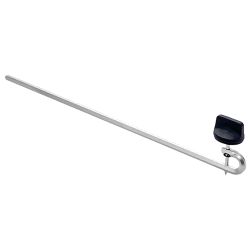
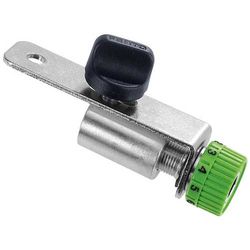
Festool SA-MFK 700 Parallel Side Fence for MFK 700

At a Glance: Precision parallel side fence for the Festool MFK 700 modular edge router, featuring fine adjustment, adjustable guide jaws, two guide rods and an integrated extraction hood for accurate routing parallel to a workpiece edge.

The Festool SA-MFK 700 is the dedicated parallel side fence for the Festool MFK 700 modular edge router. It provides a stable reference against the workpiece edge, allowing the router to produce accurately positioned grooves, rebates, flutes and other routed profiles at a controlled distance from that edge. A built-in fine adjuster makes precise positioning easy, with adjustment possible in fine 0.1 mm increments, while the adjustable guidance jaws help the fence follow the workpiece reliably throughout the cut. The robust die-cast housing is designed for professional use and connects to the MFK 700 through the two supplied guide rods. Festool also includes an extraction hood, allowing dust and chips to be collected close to the cutter when a suitable dust extractor is connected. For cabinetry, furniture making, edge work and installation tasks where repeatable parallel routing matters, the SA-MFK 700 turns the compact MFK 700 into an exceptionally precise edge-guided routing system.

Accurate routing parallel to an existing edge

A parallel side fence uses the finished edge of the workpiece as its reference. Once the required cutter-to-edge distance is set, the fence follows that edge while the router moves along the workpiece. This makes it possible to produce grooves, rebates and profiles that remain consistently parallel without relying on a separately clamped straightedge.

Product highlights

  • Designed for the MFK 700: Genuine Festool system accessory developed specifically for the modular edge router.
  • Precise parallel routing: Keeps the cutter at a controlled distance from the workpiece edge throughout the cut.
  • Fine adjustment: Allows very precise positioning after the approximate fence position has been established.
  • 0.1 mm adjustment capability: Fine-control mechanism allows the routing position to be dialled in accurately.
  • Adjustable guidance jaws: Help the fence maintain reliable contact and guidance along the workpiece.
  • Two guide rods included: Provide a rigid connection between the fence and the MFK 700.
  • Extraction hood included: Supports effective dust and chip extraction directly around the routing area.
  • Robust construction: Durable housing is designed for regular professional routing work.
  • Excellent repeatability: Once adjusted, identical routing positions can be reproduced along multiple workpieces.
  • Ideal for edge-area routing: Particularly useful for grooves, rebates, flutes and profiles positioned relative to an existing edge.

Product Compatibility

  • Festool MFK 700 modular edge router.

Compatibility note: Festool specifies the SA-MFK 700 parallel side fence for the MFK 700. Although some Festool edge-router accessories are shared with the OFK 700 family, order number 495182 is specifically listed for the MFK 700.

Write a review

Features

  • Parallel side-fence design: Uses the workpiece edge as the routing reference.
  • Integrated fine adjuster: Provides precise control over cutter position.
  • Fine 0.1 mm positioning: Useful when a groove, rebate or profile must be positioned very accurately.
  • Adjustable guide jaws: Allow the contact surfaces to be set for dependable guidance.
  • Two steel guide rods: Connect the parallel fence securely to the router.
  • Extraction hood: Helps capture routing dust and chips close to where they are generated.
  • Robust housing: Durable construction for professional workshop and site use.
  • Quick adjustment: Coarse positioning can be established first, followed by precise fine adjustment.

Benefits

  • Consistent routing position: The fence keeps the cutter parallel to the workpiece edge throughout the cut.
  • Excellent accuracy: Fine adjustment makes it easier to achieve an exact dimension without repeated trial-and-error repositioning.
  • Repeatable results: Once set, the same routing dimension can be transferred to multiple components.
  • Reliable guidance: Adjustable jaws provide a stable reference against the workpiece.
  • Cleaner working: The supplied extraction hood allows dust and chips to be captured directly at the routing area.
  • Versatile MFK 700 setup: Expands the edge router beyond bearing-guided profiling to accurately positioned parallel routing.
  • Reduced setup time: No separate straightedge or guide rail is required for many edge-referenced routing operations.

Application

  • Routing parallel to a workpiece edge.
  • Routing grooves and dadoes.
  • Routing flutes.
  • Cutting rebates and rabbets.
  • Producing decorative profiles parallel to an edge.
  • Routing in the edge area.
  • Furniture manufacture.
  • Cabinetmaking.
  • Joinery.
  • Interior fitting.
  • Shopfitting.
  • Repeat routing where consistent edge distance is required.

Extra Information

  • What does SA-MFK 700 mean? SA identifies the Festool parallel side-fence accessory, while MFK 700 identifies the router system for which it is designed.
  • What is a parallel side fence? It is a router guide that runs against the edge of the workpiece and keeps the cutter a predetermined distance from that edge.
  • What does the fine adjuster do? After the fence has been positioned approximately, the fine adjuster allows the cutter-to-edge distance to be corrected very precisely without repeatedly loosening and manually repositioning the complete fence.
  • How fine is the adjustment? The SA-MFK 700 provides precise adjustment in increments of approximately 0.1 mm.
  • What are the adjustable guide jaws for? The guide jaws form the contact surfaces that travel along the workpiece edge. Their adjustability helps provide stable, dependable guidance for the routing operation.
  • Why are there two guide rods? The pair of rods provides a rigid, parallel connection between the router and fence, helping prevent the guide from twisting during the cut.
  • Why is an extraction hood supplied? Routing produces both fine dust and larger chips. The extraction hood encloses the cutting area more effectively and provides a connection point for suitable dust extraction.
  • Can it be used on curved edges? The SA-MFK 700 is primarily intended to follow an edge that provides a suitable continuous reference for the guide jaws. For strongly curved or irregular work, a bearing-guided cutter or another guiding method may be more appropriate.
Coarse adjustment first, fine adjustment second

The quickest way to set a parallel fence is to move it close to the required dimension using the guide rods, lock the basic position and then use the fine adjuster for the final fraction of a millimetre. This approach combines fast setup with the accuracy needed for furniture and joinery work.

Why a side fence can be better than a bearing-guided cutter

A ball-bearing cutter follows directly against the edge and therefore fixes the cutter position according to the cutter and bearing geometry. The SA-MFK 700 gives the user an independently adjustable distance between the cutter and the workpiece edge. That makes it possible to route grooves, rebates and decorative details inward from the edge rather than only profiling the edge itself.

Pro Tips

  • Set the fence approximately with the guide rods first, then use the fine adjuster for the final precise dimension.
  • Measure from the cutter's cutting edge rather than from the router body when establishing an exact routing distance.
  • Make a test cut on scrap material before machining finished components, particularly where the dimension is critical.
  • Make sure both guidance jaws remain in firm, consistent contact with the workpiece edge while routing.
  • Inspect the reference edge before starting. A damaged, wavy or uneven edge will be reproduced in the routed path.
  • For repeated components, avoid disturbing the fine-adjustment setting once the test piece is correct.
  • Keep the two guide rods clean so the fence slides smoothly during setup and locks evenly.
  • Connect a suitable Festool dust extractor to the extraction hood to improve visibility and reduce chip build-up.
  • For deep grooves or rebates, use progressive routing passes instead of attempting to remove the full depth at once.
  • Maintain a smooth, consistent feed rate to improve finish quality and reduce the chance of burn marks.
  • Check that the fence locking screws are secure before every cut.
  • Do not force the fence against the workpiece edge; light, consistent side pressure is normally enough to maintain accurate guidance.

How to Use

  • Disconnect the MFK 700 from its power supply before fitting or adjusting accessories.
  • Fit the required router cutter and set the required routing depth.
  • Insert the two supplied guide rods into the appropriate mounting points on the MFK 700.
  • Fit the SA-MFK 700 parallel side fence onto the guide rods.
  • Position the fence approximately at the required distance from the cutter.
  • Secure the basic fence position according to the MFK 700 operating instructions.
  • Use the fine adjuster to bring the cutter precisely to the required distance from the workpiece edge.
  • Adjust the guidance jaws where required so they contact the reference edge correctly.
  • Fit the supplied extraction hood and connect a suitable extraction hose.
  • Make a test cut on an offcut of the same material.
  • Measure the routed position and use the fine adjuster for any final correction.
  • Secure the finished workpiece firmly.
  • Place the fence against the reference edge before starting the routing pass.
  • Start the router and allow it to reach the selected operating speed.
  • Guide the router smoothly while maintaining consistent contact between the guidance jaws and workpiece edge.
  • Use several passes where substantial routing depth or material removal is required.
  • Allow the cutter to stop completely before putting the router down or adjusting the fence.
Description Spec
Brand Festool
Cat No. FES495182
Festool Order No. 495182
Product Type Parallel Side Fence
Model SA-MFK 700
Compatible Machine Festool MFK 700
Fine Adjustment Yes
Fine Adjustment Resolution 0.1 mm
Guidance Jaws Adjustable
Guide Rods 2 Included
Dust Extraction Hood Included
Primary Application Routing Parallel to a Workpiece Edge
Typical Routing Applications Grooves, Flutes, Rebates, Rabbets and Profiles
EAN / Barcode 4014549090640
Quantity 1 Parallel Side Fence Set

Scope of Delivery:

  • 1 x Festool SA-MFK 700 parallel side fence with fine adjuster
  • 1 x Extraction hood
  • 2 x Guide rods

Packaging: Supplied in a carton. Festool MFK 700 router, router cutter and dust extractor are not included.

Safety

  • Disconnect the MFK 700 from the mains supply before fitting, removing or adjusting the parallel side fence.
  • Make sure both guide rods and all fence locking points are securely tightened before routing.
  • Confirm that the guidance jaws can travel smoothly along the workpiece edge without catching on defects or obstructions.
  • Secure the workpiece firmly before routing.
  • Wear suitable eye, hearing and respiratory protection.
  • Use suitable dust extraction through the supplied extraction hood whenever possible.
  • Keep hands clear of the cutter and intended routing path.
  • Use the feed direction specified in the MFK 700 operating instructions and avoid uncontrolled climb cutting.
  • Do not make fine-adjustment or fence-position changes while the router is running.
  • Use progressive passes for deep grooves, rebates or other operations involving substantial material removal.
  • Do not force the router through the cut. Maintain a controlled feed appropriate to the cutter and material.
  • Allow the cutter to stop completely before placing the machine down or making adjustments.
  • Inspect the fence, guide rods, adjustment mechanism and extraction hood periodically for damage or excessive wear.
  • Follow the Festool MFK 700 operating and safety instructions together with the instructions supplied for the cutter being used.