Menu
Your Cart
Delivery available nationwide | Free shipping over R1,000 | Secure payment via Visa, Mastercard & Peach | Trade accounts — call 021 931 0555

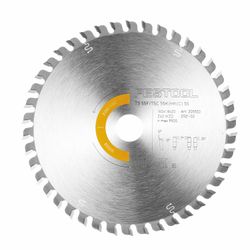
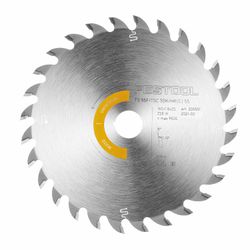
FESTOOL HW 160x2,2x20 W48 WOOD FINE CUT 160mm 48-Tooth Saw Blade

FESTOOL HW 160x2,2x20 W48 WOOD FINE CUT 160mm 48-Tooth Saw Blade
NOTE
Please confirm that stock is available in store before visiting us. Online stock available
  • Stock: In Stock
  • Model: FES491952
  • Weight: 0.33kg
  • Dimensions: 225.00mm x 205.00mm x 10.00mm
  • SKU: FES491952
  • UPC: 4014549017593
R 2,940.00
Ex VAT: R 2,556.52
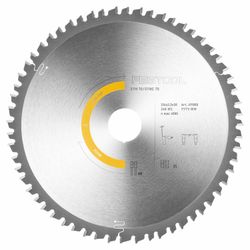
Festool HW 160x2,2x20 W48 WOOD FINE CUT Saw Blade

At a Glance: Premium 160 mm carbide-tipped fine-cut saw blade with 48 alternating teeth, 2.2 mm cutting width and 20 mm bore, designed for exceptionally clean, low-splinter cross-cuts in solid wood as well as coated and veneered panels.

The Festool HW 160x2,2x20 W48 WOOD FINE CUT is the specialist blade to reach for when the finished cut edge really matters. Its 48 fine-grain carbide teeth use an alternating cross-cut geometry that severs wood fibres cleanly, making the blade particularly effective for precise cross-cuts in solid timber and for high-quality cuts through veneered or coated sheet material. It is also well suited to fine cutting of MDF. The blade combines a high-quality 1.6 mm steel body with a 2.2 mm cutting width, a 20 mm bore and a controlled 5° chip angle, all matched to the Festool TS 55, TSC 55, ATF 55 and AP 55 saw systems. Whether producing furniture components, sizing panels or fitting a kitchen, this WOOD FINE CUT blade is designed to minimise splintering, deliver excellent cut quality and reduce the amount of finishing required after sawing.

WOOD FINE CUT – for cuts that are meant to be seen

A fine-cut blade uses significantly more teeth than a ripping or universal blade. Each tooth removes a smaller amount of material, allowing the blade to cut fibres progressively rather than tearing them away aggressively. The result is a smoother, cleaner edge – especially when cross-cutting solid wood or cutting decorative veneered and coated panels.

Product highlights

  • Excellent cut quality: Designed for clean, precise and low-splinter finished cuts.
  • 160 mm blade diameter: Correct diameter for the compatible Festool TS 55, TSC 55, ATF 55 and AP 55 saw systems.
  • 48 carbide teeth: High tooth count provides the controlled cutting action needed for fine cross-cuts and quality panel work.
  • Alternating-tooth geometry: Successive teeth cut alternately from the left and right, producing a clean shearing action through wood fibres.
  • Fine-grain carbide: High-quality carbide cutting edges provide excellent sharpness, wear resistance and dependable professional performance.
  • 5° chip angle: The tooth angle is matched to the application and machine for smooth, controlled fine cutting.
  • 2.2 mm cutting width: Provides a stable kerf while maintaining efficient cutting performance.
  • 1.6 mm blade body: High-quality steel construction provides the stability required for accurate cuts.
  • 20 mm bore: Precision centre bore matched to the intended Festool saw systems.
  • Ideal for veneered panels: Fine tooth geometry helps minimise breakout and damage to delicate veneer surfaces.
  • Excellent for coated panels: Well suited to furniture and cabinet panels where a clean finished edge is important.
  • Clean solid-wood cross-cuts: Especially effective when cutting across the grain.
  • Fine MDF cutting: Suitable for clean, controlled cutting of MDF.
  • Festool colour coding: Application-specific colour identification helps make selecting the correct saw blade quicker and easier.

Product Compatibility

  • Festool TS 55: Designed for the Festool TS 55 plunge-cut saw family using the applicable 160 mm blade specification.
  • Festool TSC 55: Compatible with Festool TSC 55 cordless plunge-cut saws using this 160 x 20 mm blade format.
  • Festool ATF 55: Compatible with the earlier Festool ATF 55 saw system.
  • Festool AP 55: Compatible with the Festool AP 55 saw system.

Compatibility note: Always confirm the exact blade specification required by the machine. This blade has a 160 mm diameter, 20 mm bore, 2.2 mm cutting width and 1.6 mm blade body.

Write a review

Features

  • WOOD FINE CUT specification: Optimised for superior finished cut quality.
  • 160 mm outside diameter: Matched to compatible Festool 55 mm-class plunge-cut saw systems.
  • 2.20 mm cutting width: Produces the specified kerf for the intended saw system.
  • 1.60 mm standard blade thickness: Stable steel body supports precise, controlled cutting.
  • 20 mm centre bore: Precision fit for compatible Festool saw spindles.
  • 48 teeth: Fine tooth count provides clean edges in timber and high-quality sheet materials.
  • W tooth form: Alternating cross-cut geometry produces an efficient shearing action.
  • 5° chip angle: Supports controlled feed and fine cutting quality.
  • Fine-grain carbide teeth: Offers excellent edge retention and professional durability.
  • High-quality steel blade body: Manufactured for accurate running and dimensional stability.
  • Application colour coding: Makes correct blade selection easier in the workshop or on site.

Benefits

  • Cleaner visible edges: The 48-tooth configuration produces a noticeably finer finish than coarse ripping blades.
  • Reduced splintering: Alternating carbide teeth shear fibres cleanly, helping minimise breakout on solid wood and decorative panels.
  • Excellent cross-cut performance: Particularly effective when cutting across the grain in solid timber.
  • Ideal for decorative panels: The fine tooth configuration is valuable when working with veneered and coated sheet goods.
  • Professional panel sizing: Provides the cut quality required for furniture, cabinet and kitchen manufacture.
  • Consistent accuracy: The rigid steel body and precisely matched tooth geometry support dependable repeatable cutting.
  • Long working life: Fine-grain carbide teeth provide excellent wear resistance when used correctly.
  • Less finishing afterwards: A cleaner saw cut can reduce subsequent sanding and edge preparation.

Application

  • Clean and low-splinter cross-cuts in solid wood.
  • Fine cutting of veneered panels.
  • Fine cutting of coated panels.
  • Fine cutting of MDF.
  • Furniture manufacturing.
  • Panel cutting and sizing.
  • Cabinetmaking.
  • Kitchen manufacturing and fitting.
  • Joinery and interior finishing.
  • Applications where a high-quality visible cut edge is required.

Extra Information

  • What does HW mean? HW is Festool's designation for carbide cutting material. Fine-grain carbide combines excellent hardness, sharpness and long cutting-edge life.
  • What does 160x2,2x20 mean? The designation identifies the blade's principal dimensions: 160 mm outside diameter, 2.2 mm cutting width or kerf and a 20 mm centre bore.
  • What does W48 mean? W identifies the alternating-tooth geometry and 48 is the total number of saw teeth.
  • Why 48 teeth? A high tooth count means each individual tooth removes a relatively small amount of material, creating a smoother cutting action and finer finished edge.
  • Alternating-tooth geometry explained: Successive teeth are ground alternately to the left and right. This slices the material from alternating sides and produces particularly clean cross-cuts in wood and wood-based panels.
  • What does the 5° chip angle do? The modest positive chip angle creates a controlled cutting action suited to fine cutting rather than the more aggressive feed associated with low-tooth-count ripping blades.
  • 2.2 mm kerf versus 1.6 mm blade body: The carbide teeth project beyond the steel blade body and cut a 2.2 mm-wide slot. The narrower 1.6 mm body then travels through the kerf with reduced friction.
  • Why is it particularly good for cross-cuts? Cutting across the grain requires large numbers of wood fibres to be severed cleanly at the surface. The 48-tooth geometry is specifically designed to perform this task with minimal tearing.
  • Why is it suitable for veneered material? Thin veneer surfaces are vulnerable to breakout. A high tooth count and controlled cutting action help minimise tearing along the finished edge.
  • When should you choose another blade? For repeated rip cuts along the grain in thick solid timber, a lower-tooth-count WOOD RIP CUT blade will generally cut faster and clear chips more efficiently.
Fine-cut blade versus universal blade

A universal blade balances cutting speed and finish across many woodworking tasks. The WOOD FINE CUT W48 moves that balance firmly toward finished edge quality. With 48 teeth working progressively through the material, it is the better choice for cross-cutting solid wood and cutting decorative panels where visible breakout or rough edges would create additional finishing work.

Pro Tips

  • Choose the W48 blade when the finished cut edge will remain visible or needs minimal further preparation.
  • For the best solid-wood cross-cuts, use a smooth, controlled feed instead of forcing the saw aggressively through the workpiece.
  • Keep the carbide teeth clean. Resin and adhesive deposits increase friction and can make a sharp blade behave like a dull one.
  • When cutting veneered or coated boards, support the panel properly to prevent vibration around the cut.
  • Use the Festool guide rail and splinter guard in good condition to take full advantage of the blade's fine-cut capability.
  • For expensive decorative material, make a test cut in an offcut before sizing the finished component.
  • If cutting pressure increases noticeably or edge quality begins to deteriorate, inspect the teeth instead of simply feeding the saw harder.
  • Use effective dust extraction to improve cut-line visibility and keep chips from accumulating around the machine.
  • For long rip cuts through thick solid timber, change to the appropriate WOOD RIP CUT blade rather than making the fine-cut W48 do every job.
  • Store the blade so the carbide teeth cannot strike other metal tools or saw blades.
  • Have the blade professionally sharpened when required so the original tooth geometry is maintained.

How to Use

  • Disconnect the saw from its power source or remove the battery before changing the blade.
  • Confirm that the saw is approved for a 160 mm blade with a 20 mm bore and the specified cutting-width and blade-body dimensions.
  • Inspect the blade for cracked, chipped, loose or missing carbide teeth before installation.
  • Clean the saw spindle, flange and blade-contact surfaces.
  • Fit the HW 160x2,2x20 W48 so its direction of rotation matches the markings on the saw.
  • Secure the blade using the saw's specified clamping system.
  • Check that the blade is seated correctly and all protective guards and mechanisms operate freely.
  • Set the required cutting depth and position the workpiece securely.
  • Connect suitable dust extraction where available.
  • Place the saw or guide rail correctly on the workpiece and align the required cutting line.
  • Start the saw and allow the blade to reach operating speed before entering the material.
  • Guide the saw smoothly through the cut using controlled forward pressure.
  • Avoid twisting or forcing the blade sideways during cutting.
  • Allow the blade to stop completely before making adjustments, removing offcuts or setting the machine down.
  • Clean resin and dust from the blade periodically to maintain optimum cutting performance.

Specifications

Description Spec
BrandFestool
Cat No.FES491952
Festool Order No.491952
Product TypeFine-Cut Circular Saw Blade
ModelHW 160x2,2x20 W48
Blade RangeWOOD FINE CUT
Cutting MaterialFine-Grain Carbide (HW)
Blade Diameter160 mm
Cutting Width / Kerf2.20 mm
Standard Blade Thickness1.60 mm
Bore Diameter20 mm
Number of Teeth48
Tooth ShapeW - Alternating Tooth
Chip Angle5°
Primary Cutting TypeFine Cross-Cuts
Suitable MaterialsSolid Wood, Veneered Panels, Coated Panels, MDF
Compatible MachinesTS 55, TSC 55, ATF 55, AP 55
Primary ApplicationsFurniture Manufacture, Panel Cuts, Kitchen Fitting
EAN / Barcode4014549017593
Quantity1 Piece

Scope of Delivery:

  • 1 x Festool HW 160x2,2x20 W48 WOOD FINE CUT saw blade

Safety

  • Wear suitable eye, hearing and respiratory protection whenever operating the saw.
  • Use the blade only with machines approved for its 160 mm diameter, 20 mm bore, 2.2 mm cutting width and 1.6 mm blade-body thickness.
  • Disconnect the saw from its power supply or remove the battery before fitting, removing, cleaning or inspecting the blade.
  • Inspect the blade before every use for chipped, cracked, loose or missing carbide teeth.
  • Never use a blade with a cracked, warped or otherwise damaged steel body.
  • Install the blade in the correct direction of rotation according to the markings on the blade and machine.
  • Ensure the spindle, flanges and blade-contact surfaces are clean and correctly assembled.
  • Use all guards, riving devices, guide systems and other safety equipment specified for the saw.
  • Secure and support the workpiece so the kerf cannot close unexpectedly and pinch the blade.
  • Maintain a stable stance and keep hands away from the cutting path.
  • Never twist or force the blade sideways through a cut.
  • Do not exceed the maximum rotational speed permitted for the blade.
  • Allow the blade to reach operating speed before entering the material.
  • Wait until the blade has stopped completely before removing offcuts, making adjustments or putting the saw down.
  • Wood dust, MDF dust and dust from manufactured boards can present health hazards. Use suitable extraction and respiratory protection appropriate to the material.
  • Have carbide saw blades serviced or sharpened only by suitably qualified professionals who can maintain the correct original tooth geometry.
  • Read and follow the Festool saw and saw-blade operating and safety instructions before use.