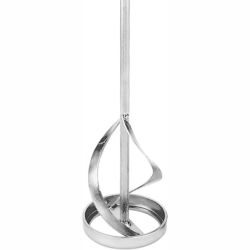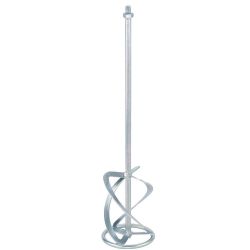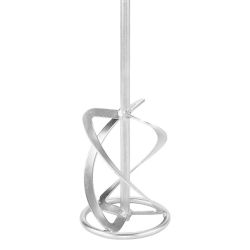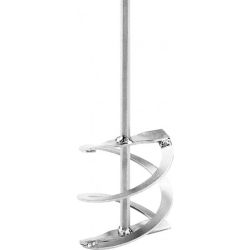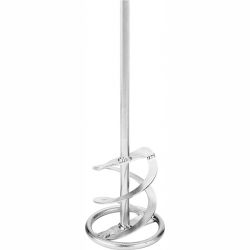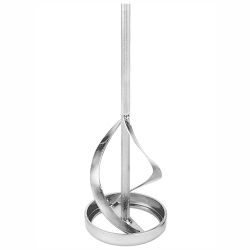
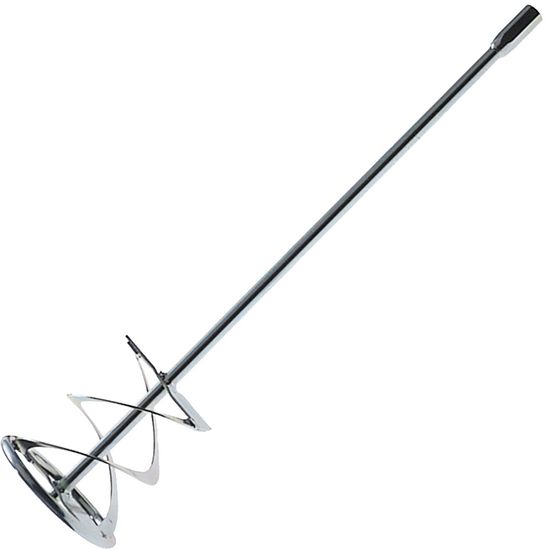
FESTOOL WR 160 R M14 Clockwise Spiral Stirring Rod 160mm
- Stock: In Stock
- Model: FES484289 5955
- Weight: 1.76kg
- Dimensions: 62.50mm x 16.00mm x 16.00mm
- SKU: FES484289
- UPC: 4014549088302
Festool WR 160 R M14 Clockwise Spiral Stirring Rod 160mm
At a Glance: Heavy-duty 160 mm clockwise spiral stirring rod with M14 connection for the Festool RW 1000, designed for difficult-to-stir and viscous materials in mixing quantities up to approximately 150 kg.
The Festool WR 160 R M14 is a large, heavy-duty clockwise spiral stirring rod developed for thoroughly mixing demanding, high-viscosity materials. Its 160 mm spiral mixing head works from the bottom of the container upwards, drawing heavier material from the base through the centre of the mixture before allowing it to flow back down around the outside. This powerful upward mixing action helps combine dense ingredients evenly while allowing the stirrer to work its way naturally into thick material. With a substantial 210 mm-high mixing head, 625 mm overall length and robust M14 connection, the WR 160 R is ideally suited to the Festool RW 1000 and demanding professional mixing applications. Its large size makes it particularly useful where substantial batches of difficult material need to be blended thoroughly and consistently, with Festool specifying the WR 160 R for quantities up to approximately 150 kg.
The WR 160 R uses a clockwise spiral geometry that conveys material from the bottom of the mixing container upwards. This action is particularly effective with viscous and difficult-to-stir mixtures because heavier material that settles at the bottom is continually drawn back into the mixing process. The result is a more consistent blend throughout the container with less unmixed material remaining at the base.
Product highlights
- Heavy-duty 160 mm mixing head: Large diameter provides substantial mixing action for demanding professional applications.
- Clockwise spiral design: Draws heavy material from the bottom of the container upwards through the centre of the mixture.
- Designed for viscous materials: Particularly effective with thick, difficult-to-stir compounds where strong material movement is required.
- Up to approximately 150 kg: Designed for very large mixing quantities when used with a suitable mixer and container.
- 210 mm mixing-head height: Large spiral section provides effective engagement with substantial volumes of material.
- 625 mm overall length: Provides useful reach into larger mixing containers.
- M14 connection: Robust threaded connection for secure attachment to the compatible Festool mixing system.
- Easy material penetration: The spiral geometry allows the stirring rod to work its way naturally into heavy mixtures.
- Thorough bottom-to-top circulation: Helps prevent dense ingredients from remaining unmixed at the bottom of the container.
- Professional construction: Designed for the demanding daily mixing requirements of painters, plasterers and renovation professionals.
Product Compatibility
- Festool RW 1000: The WR 160 R is specifically designed for use with the Festool RW 1000 stirrer.
- M14 connection: Uses an M14 threaded mounting system for a strong, secure mechanical connection.
- Large mixing containers: Particularly suited to suitably sized containers capable of accommodating its 160 mm diameter and large mixing capacity.
Compatibility note: Confirm that the mixer has the correct M14 connection, sufficient power and an appropriate permitted stirring-rod diameter before fitting the WR 160 R. This product is specifically listed by Festool for the RW 1000.
Features
- Clockwise rotation: Spiral geometry is designed to work with clockwise mixer rotation.
- Bottom-to-top material flow: Draws dense material upwards through the centre of the mixing container.
- 160 mm diameter: Large mixing diameter is suitable for substantial batches and demanding compounds.
- 210 mm head height: Deep spiral section engages a large volume of material during every rotation.
- 625 mm length: Provides ample working reach into suitable mixing containers.
- M14 threaded connection: Provides a strong mechanical interface with the compatible mixer.
- Heavy-material geometry: Designed to penetrate and circulate mixtures that can be difficult to move with smaller or lighter-duty stirring rods.
- High-capacity mixing: Suitable for mixing quantities up to approximately 150 kg.
Benefits
- More thorough mixing: Material resting at the bottom of the container is continuously drawn back into the mixture.
- Excellent for dense compounds: The large clockwise spiral creates strong material movement through thick and resistant mixtures.
- Reduced unmixed material: Bottom-to-top circulation helps prevent heavy ingredients from remaining concentrated at the base of the container.
- Efficient large-batch preparation: The 160 mm head is designed for substantial material quantities where a smaller stirrer would be inefficient.
- Natural working action: The spiral form helps the stirring rod work its way into the material rather than simply spinning across the surface.
- Consistent mixture quality: Strong circulation helps distribute ingredients more evenly throughout the batch.
- Professional durability: Designed for demanding mixing applications where dependable performance is essential.
Application
- Mixing viscous and difficult-to-stir materials.
- Mixing heavy construction compounds.
- Preparing large batches of suitable plaster and filler materials.
- Mixing dense levelling and filling compounds.
- Preparing suitable flooring and screed-type mixtures.
- Professional painting and decorating preparation.
- Renovation and construction mixing work.
- Applications requiring strong bottom-to-top material circulation.
- Large-volume mixing up to approximately 150 kg, subject to the material and mixer capability.
Extra Information
- What does the 'R' mean? The R identifies the clockwise or right-hand mixing action of this stirring rod. The geometry is designed so that, during the intended direction of rotation, material is transported from the bottom of the container upwards.
- How the mixing action works: Heavy material is drawn upwards through the centre of the spiral and then flows back down around the outside of the mixing container. This establishes continuous circulation throughout the batch.
- Why bottom-to-top mixing is useful: Dense compounds and heavier ingredients naturally tend to settle. Pulling material from the bottom continuously helps incorporate these ingredients and reduces the likelihood of poorly mixed material remaining at the base.
- Designed for difficult materials: The substantial 160 mm head and clockwise spiral provide strong mechanical movement for materials that offer greater resistance to stirring.
- Large-capacity design: Festool specifies the WR 160 R for mixing quantities up to approximately 150 kg, making it one of the larger-capacity stirring rods in this style.
- M14 connection: The threaded connection provides a secure drive interface and is commonly used on professional heavy-duty mixing equipment.
- Correct stirring rod selection matters: Different materials behave differently while being mixed. Thin liquids, viscous compounds and materials containing solids may require different stirring geometries to achieve the best results.
A clockwise spiral such as the WR 160 R is particularly effective when the mixture is heavy enough to benefit from being lifted from the bottom of the container. This strong upward material flow assists with thoroughly incorporating dense components and gives the operator a stirring rod that naturally works its way into difficult material rather than remaining only at the surface.
Pro Tips
- Always choose a mixing container large enough to comfortably accommodate the 160 mm stirring head and the expansion and movement of the material during mixing.
- Begin mixing at a low speed where possible, especially with dry or powdery components. This helps reduce splashing and airborne dust.
- Increase the mixing speed gradually once the stirring head is fully immersed in the material.
- Keep the stirring head beneath the material surface during normal mixing to help reduce splashing and unnecessary air entrainment.
- Move the stirring rod steadily around the container so material from the sides and corners is incorporated into the main flow.
- Allow the bottom-to-top spiral action to do the work rather than forcing the stirrer aggressively against the bottom of the container.
- For multi-component products, follow the material manufacturer's specified mixing time, speed and resting or maturation period.
- Do not exceed the mixer's recommended maximum stirring-rod diameter or permitted material quantity.
- Clean the stirring rod immediately after use. Hardened filler, plaster, adhesive or cementitious material can be considerably more difficult to remove later.
- Inspect the M14 thread before fitting the stirring rod and remove dried material that could prevent full engagement.
- Never operate the stirrer with the mixing head only partly attached to the mixer. Make sure the M14 connection is fully and securely tightened before use.
- If a mixture is exceptionally dense, prepare smaller batches if required rather than overloading the mixer or attempting to exceed its rated capacity.
How to Use
- Disconnect the mixer from its electrical supply before installing the stirring rod.
- Confirm that the mixer is suitable for an M14 stirring rod with a 160 mm diameter.
- Inspect the WR 160 R for damage, excessive wear or deformation before fitting it.
- Clean the M14 threads on both the mixer connection and stirring rod.
- Screw the WR 160 R securely into the mixer and tighten it according to the mixer manufacturer's instructions.
- Place the required material into a suitably sized and stable mixing container.
- Insert the stirring head into the material before starting the mixer, where recommended by the machine and material instructions.
- Start at a low speed to minimise splashing or airborne powder, then gradually increase to the appropriate mixing speed.
- Guide the mixer steadily around the container while allowing the clockwise spiral to draw material upwards from the bottom.
- Continue mixing for the time specified by the material manufacturer until a consistent, homogeneous mixture is achieved.
- Switch off the mixer and allow the stirring rod to stop completely before removing it from the material.
- Disconnect the mixer from the power supply before removing the stirring rod.
- Clean the WR 160 R thoroughly immediately after use before the mixed material has time to harden.
Specifications
| Description | Spec |
|---|---|
| Brand | Festool |
| Cat No. | FES484289 |
| Festool Order No. | 484289 |
| Product Type | Clockwise Spiral Stirring Rod |
| Model | WR 160 R |
| Connection | M14 |
| Rotation / Mixing Direction | Clockwise |
| Material Flow | Bottom to Top |
| Stirring Rod Diameter | 160 mm |
| Overall Length | 625 mm |
| Mixing Head Height | 210 mm |
| Maximum Recommended Material Quantity | Up to approx. 150 kg |
| Primary Material Type | Viscous / Difficult-to-Stir Materials |
| Compatible Mixer | Festool RW 1000 |
| Quantity | 1 Piece |
| Country of Origin | Czech Republic |
Scope of Delivery:
- 1 x Festool WR 160 R M14 clockwise spiral stirring rod
- Supplied in self-service display packaging
Safety
- Wear suitable eye protection, protective gloves and appropriate respiratory protection when mixing materials that can splash or produce hazardous dust.
- Follow the safety instructions and personal protective equipment requirements specified by the material manufacturer.
- Disconnect the mixer from the electrical supply before fitting, removing, cleaning or inspecting the stirring rod.
- Make sure the M14 connection is fully engaged and securely tightened before starting the mixer.
- Never use a bent, cracked, heavily worn or otherwise damaged stirring rod.
- Use a stable mixing container of suitable size and do not fill it so high that material can be thrown out during mixing.
- Start the mixer at a controlled speed to minimise sudden movement, splashing and airborne powder.
- Maintain a secure two-handed grip on the mixer where required by the machine operating instructions.
- Be prepared for reaction torque when starting or when the stirring rod enters particularly dense material.
- Keep hands, clothing, cables and other objects away from the rotating stirring rod.
- Do not touch or attempt to clean the stirring rod while it is rotating.
- Do not exceed the permissible mixing quantity, stirring-rod diameter or operating limits of the connected mixer.
- Ensure adequate ventilation when mixing materials that release fumes, vapours or airborne dust.
- Never use the stirring rod in flammable or explosive mixtures unless the complete mixing system is specifically approved for that application.
- Allow the stirring rod to stop completely before lifting it from the container or making adjustments.
- Read and follow the Festool mixer operating instructions and the safety information supplied with the material being mixed.